
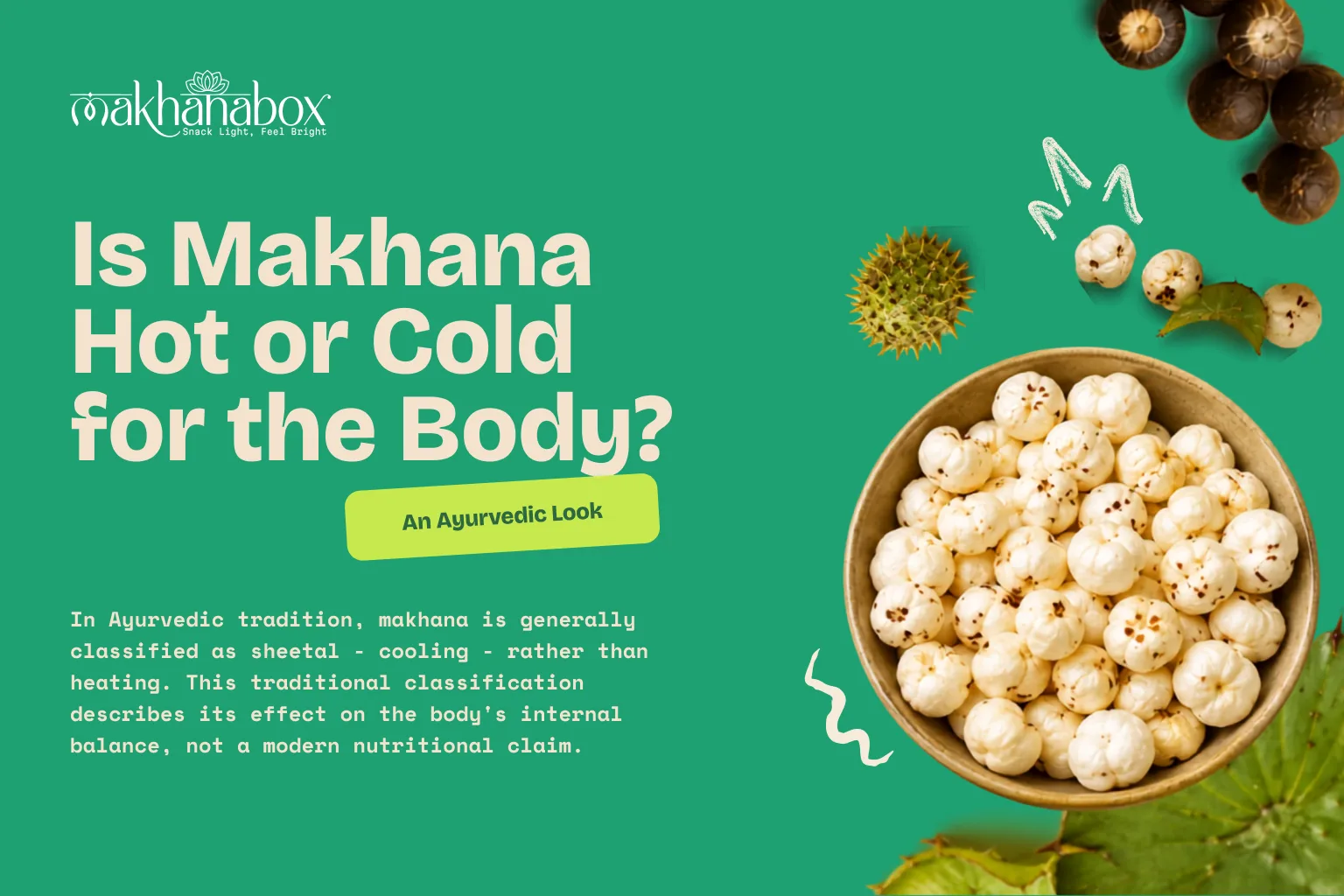
In Ayurvedic tradition, makhana is generally classified as sheetal — cooling — rather than heating. That's a traditional classification, not a modern clinical claim, and the two frameworks answer different questions. Here's what "cooling" actually means in this context, and where the honest edges of that claim are.
What "hot" and "cold" mean in Ayurveda
Ayurveda, the traditional Indian system of medicine, classifies foods partly by virya — potency — as either ushna (heating) or sheetal (cooling). This isn't about a food's serving temperature; it's a description of the effect the food is traditionally believed to have on the body's internal balance. Alongside virya, Ayurveda also considers rasa (taste) and how a food interacts with the three doshas — vata, pitta and kapha, the constitutional energies at the centre of Ayurvedic theory. It's a complete, self-contained framework with its own internal logic, built over a very long tradition — not a folk add-on to modern nutrition science, and not something modern nutrition science directly measures either.
Where makhana fits in that framework
Within Ayurvedic classification, makhana is generally described as having a madhura (sweet) rasa and a sheetal (cooling) virya, and it's often described as tridoshic — meaning it's traditionally considered balancing for all three doshas rather than aggravating any one of them, when eaten in moderation. That combination is part of why makhana shows up so often in traditional fasting foods, religious offerings, and dishes associated with cooling or calming qualities, alongside its practical role as a filling, easy-to-digest food during religious fasts (see our Navratri & vrat fasting guide for more on that side of it).
What "cooling" means in practice, according to tradition
Cooling foods are traditionally suggested for balancing pitta — the dosha associated with heat, intensity and inflammation in Ayurvedic theory — and are sometimes recommended more heavily in hot weather or for people considered pitta-dominant by a practitioner's assessment. Some traditional guidance also favours cooling foods less in cold weather, in favour of warming ones, though this varies by tradition, practitioner and individual constitution rather than being one universal rule. This is exactly the kind of personalised judgement Ayurveda is built around — a qualified Ayurvedic practitioner is the right source for how this applies to you specifically, not a general article from a snack brand.
How this relates to modern nutrition science
It's worth being direct about this: Ayurvedic hot/cold classification and modern nutritional science (calories, macronutrients, glycemic index, and so on) are different frameworks that don't map cleanly onto each other, and neither one "proves" or "disproves" the other on its own terms. We've written separately and carefully about makhana's actual measured nutrition and glycemic index using published research — that's the modern-science side of the picture. This article is about the traditional side, and we think both are worth understanding on their own terms rather than blending them into one confused claim.
Frequently asked questions
What does "cooling" mean in Ayurveda? In Ayurveda, foods are traditionally classified by virya (potency) as either heating (ushna) or cooling (sheetal) — a description of the effect a food is believed to have on the body's internal state, not its literal serving temperature. It's a framework from traditional Indian medicine, separate from modern nutritional science.
Is makhana considered good for pitta dosha? Cooling foods are traditionally recommended for balancing pitta, the dosha associated with heat and intensity, which is why makhana often comes up in pitta-pacifying diet suggestions. Ayurvedic recommendations are usually personalised to an individual's constitution, though, so this is general traditional guidance, not a one-size-fits-all rule.
Should makhana be avoided in winter or cold weather? There's no single agreed answer — some traditional guidance leans toward favouring warming foods in cold weather and using cooling foods more in hot weather or for pitta-dominant individuals, but practices and opinions vary between Ayurvedic traditions and practitioners. If this matters to you, it's worth asking a qualified Ayurvedic practitioner rather than relying on a general snack-brand article.
Is the hot/cold food classification scientifically proven? Not in the way modern clinical nutrition research works. Ayurvedic hot/cold (virya) classification comes from a traditional medical system with its own internal logic, built over centuries of observation and practice — it isn't something modern biochemistry directly measures or validates, and it isn't a substitute for medical or nutritional advice from a qualified professional.
About Makhana Box
We're a snack company, not an Ayurvedic clinic — we've written this because it's a genuine, common question, not to make a health claim on top of it. If you want the modern nutritional side instead, our nutrition & benefits page covers that with real, sourced figures. Reach us anytime:
- Phone: +91 91559 97784
- Email: sales@makhanabox.com
This article describes traditional Ayurvedic classification for general informational and cultural interest. It is not medical or nutritional advice — consult a qualified Ayurvedic practitioner or doctor for guidance specific to you.