
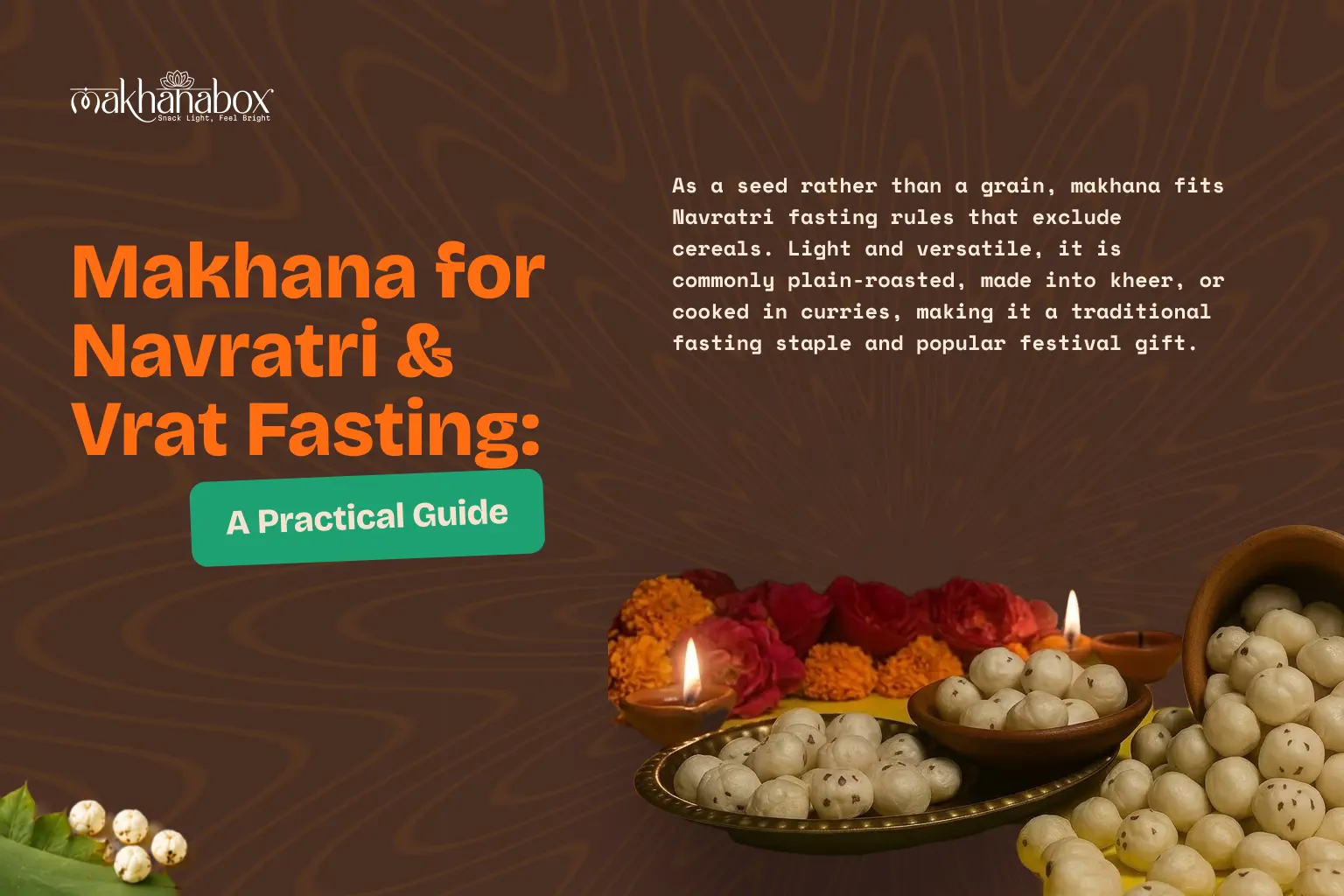
Makhana is a traditional Navratri and vrat fasting food because it's a seed, not a grain — which means it sits comfortably within fasting rules that exclude cereals, and it's light enough to eat through a day of reduced meals. It's commonly prepared plain-roasted, simmered into kheer, or cooked into a light curry, and it's a genuinely popular festival gifting item in North India. Here's a practical look at why, and how people actually eat it during a fast.
Why makhana fits fasting rules
Navratri and many other vrat observances exclude grains and certain vegetables, following dietary rules that vary by region, family and specific fast. Makhana's advantage is straightforward: it's the popped seed of an aquatic plant, not a cereal grain, so it's commonly treated as falling outside the grain restriction. That's a big part of why it shows up so often on fasting menus across North India, alongside foods like sabudana (sago), kuttu (buckwheat, technically a pseudo-grain) and singhara (water chestnut) flour.
Is it actually "sattvic"?
Makhana is widely regarded as sattvic-diet-appropriate — plain, unprocessed-feeling, and free of the pungency associated with foods like onion and garlic, which many fasting and sattvic traditions avoid. We'd rather be honest than authoritative here: dietary rules around fasting vary meaningfully by region, family tradition and the specific vrat being kept, so "sattvic" isn't a single fixed checklist. If you're following a specific family or regional tradition, that guidance takes precedence over anything general we say here.
Simple, fasting-friendly ways to eat it
The simplest approach is roasting makhana plain in a little ghee with a pinch of rock salt (sendha namak, which is generally permitted during fasts that exclude regular iodised table salt) — a light, crunchy snack through the day. A step up is makhana kheer: makhana simmered in milk with sugar or jaggery, cardamom, and a scatter of nuts, a genuinely traditional festive sweet rather than a fasting compromise. For something more filling, a light makhana curry — makhana simmered in a mild, grain-free gravy with fasting-appropriate spices and no onion or garlic — works as a proper fasting meal rather than just a snack. In every case, raw makhana (before any seasoning) is the safest starting point, since you control exactly what goes into it.
What to skip if you're keeping a strict fast
Our seasoned pouches are built for everyday snacking, not vrat rules specifically — flavours like Tangy Masala, Peri-Peri and Cheese & Herb contain regular salt, and some include garlic or onion-derived ingredients in their spice blends, which don't fit a strict fast. If you're keeping a fast that excludes those, raw makhana or our Classic Roasted (rock salt only) are the more straightforward choices — check the ingredient list on any flavour's page before buying if you're unsure, since fasting rules genuinely vary by tradition.
Buying for the festival: raw grades and bulk orders
For home cooking through Navratri — kheer, curry, or your own roast — our raw makhana comes in four size grades from 3 Suta (smallest, best for grinding into flour) up to 6+ Suta (largest, best for presentation and gifting). Makhana is also a common festival gifting item in North India, and if you're organising something larger — a gift box for extended family, a corporate Navratri hamper, or catering for a community fasting event — our bulk orders page is the place to start; the earlier before the festival you reach out, the more comfortably we can plan quantity and timing.
Frequently asked questions
Why is makhana eaten during Navratri and vrat fasting? Makhana is a seed, not a grain, so it fits within fasting rules that exclude cereals and grains during Navratri and other vrat observances. It's also light, easy to digest, and traditional across many parts of North India for fasting meals.
Is makhana sattvic? Makhana is widely treated as fasting- and sattvic-diet-appropriate in North Indian tradition, since it's a plain, grain-free plant food. Specific dietary rules can vary by region, family and the particular vrat being observed, so it's worth checking your own tradition if you're unsure.
How do you eat makhana during a fast? Common fasting-friendly preparations include roasting it plain in ghee with a pinch of rock salt (sendha namak), simmering it into a sweet makhana kheer with milk, or cooking it into a light curry with fasting-appropriate spices — all avoiding regular table salt, onion, garlic and grains where the fast requires that.
Can I use flavoured Makhana Box pouches for a vrat fast? Our seasoned flavours (Tangy Masala, Peri-Peri, Cheese & Herb) contain ingredients like regular salt, garlic or onion powder that don't fit strict vrat rules, so raw or plain-roasted makhana is the safer choice during a fast. Check your own fast's specific rules if in doubt.
Is makhana good for bulk or gifting orders during festival season? Yes — makhana is a common festive gifting item in North India, especially in raw form for kheer or home-roasting. We take bulk orders for festival and corporate gifting; reach out via our bulk orders page to arrange quantity and timing ahead of the festival.
About Makhana Box
Navratri is a busy season for us, and it's usually a mix of families buying raw makhana in bulk for kheer and gifting, and people restocking flavoured pouches for after the fast breaks. For home cooking, start with our raw makhana grades; for festival hampers or larger quantities, see bulk orders. Reach us anytime:
- Phone: +91 91559 97784
- Email: sales@makhanabox.com
This article is for general information about food traditions and is not religious, medical, or nutritional advice. Fasting practices vary by region and family — please follow your own tradition's guidance, and consult a qualified professional if you have a health condition affecting fasting.