
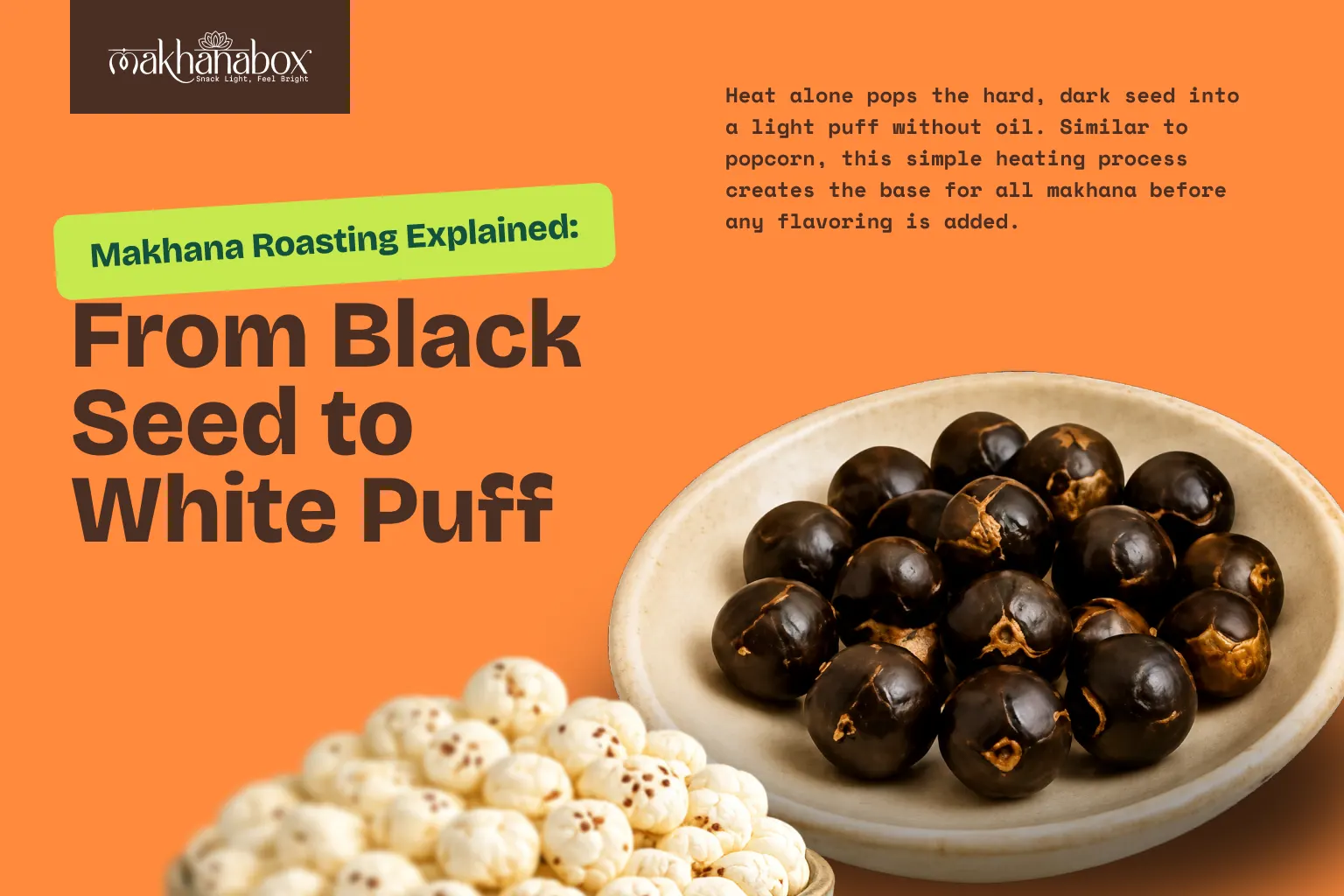
Makhana turns from a hard, dark seed into a light white puff through heat alone — no oil, no pressure-frying, nothing added at this stage. The dried seed is heated until it cracks and expands, the same basic principle as popcorn, and that single moment of popping is what makes a makhana a makhana at all, whether it ends up sold raw or flavoured.
The seed you don't usually see
Before it's popped, makhana doesn't look anything like the snack in your pack. It starts as a small, hard, dark seed — often described as black or dark brown — pulled from the pond and sun-dried. If you handed someone this seed without context, "future crunchy white snack" wouldn't be the first guess. That transformation is entirely the next step's doing.
What actually happens when it "pops"
The dried, graded seed is heated — traditionally over an open pan or kadhai, seed by seed or in small quantities, using heat and pressure built up inside the hard shell until it cracks. When it cracks, the seed's structure expands rapidly into the light, airy, near-white puff everyone recognizes. It's a physical transformation, not a chemical or cosmetic one: nothing is added to change the seed's color or texture at this stage, the heat alone forces it open and expands it. This is the same "pop" step we describe as Step 03 on how we process raw makhana — it's identical whether the seed is destined to be sold raw and plain, or roasted and seasoned into a flavour.
Why heat, and not oil
It's worth being direct about this because it's a common assumption: makhana doesn't need oil to get crunchy. The pop itself, from heat alone, is what creates the light, airy texture — the same reason popcorn doesn't need deep-frying to be crunchy. Frying makhana would add fat and calories without adding much to a texture that heat already delivers on its own. Any oil that shows up later, in a flavoured pouch, is there for the seasoning to stick and for flavour, not to create the crunch itself.
Small-batch dry-roasting, done deliberately
We dry-roast every batch of Makhana Box product in small quantities rather than one large industrial run. The reasoning is practical: heat reaching the seed evenly matters, both for a consistent pop and, for our flavoured pouches, for how well a seasoning coating sticks and distributes once it's applied to the still-warm puff. A large, uneven batch makes both of those harder to control. It also means we're not roasting to fill a warehouse shelf — see Step 04 on the process page for how packing works the same way, made to order rather than pulled from standing stock.
From the same pop, two different products
Every makhana we sell goes through this same popping step — it's the one part of the process that raw and flavoured makhana share completely. What happens right after is where they split. Raw makhana is popped and left plain, exactly as it comes off the heat, ready for your own kheer, curry, or home roasting on raw makhana. Flavoured makhana gets seasoned while it's still warm, so the coating actually sticks, and turns into the six pouches on our flavours page. Same pop, same seed, two different endpoints.
Frequently asked questions
Does makhana get fried to make it crunchy? No. The crunch comes from popping the dried seed with heat alone, the same way popcorn pops — frying isn't part of what turns a hard seed into a light puff. Any oil used afterward is only for flavour, not for creating the crunch.
What color is makhana before it's popped? The dried, unpopped seed is hard and dark, often described as black or dark brown. Popping is what transforms it into the light, near-white puff most people picture when they hear "makhana."
Is raw makhana already popped? Yes — "raw" on our raw makhana grades refers to unroasted and unseasoned, not unpopped. Every makhana you can eat, raw or flavoured, has already gone through the same heat-popping step; what raw skips is the seasoning that comes after.
Why does Makhana Box dry-roast in small batches instead of one large batch? Small batches let heat reach the seed more evenly, which matters for both the pop itself and the flavour coating applied afterward — a large, uneven batch is harder to roast and season consistently all the way through.
About Makhana Box
We dry-roast every batch in small quantities in Patna, seasoning it while it's still warm so the coating actually sticks — see the full four-step journey on how we process, or browse what comes out the other end of that pop on our flavours. Reach us anytime:
- Phone: +91 91559 97784
- Email: sales@makhanabox.com
This article describes general practice in makhana popping and roasting and may vary by grower, processor, and batch.