
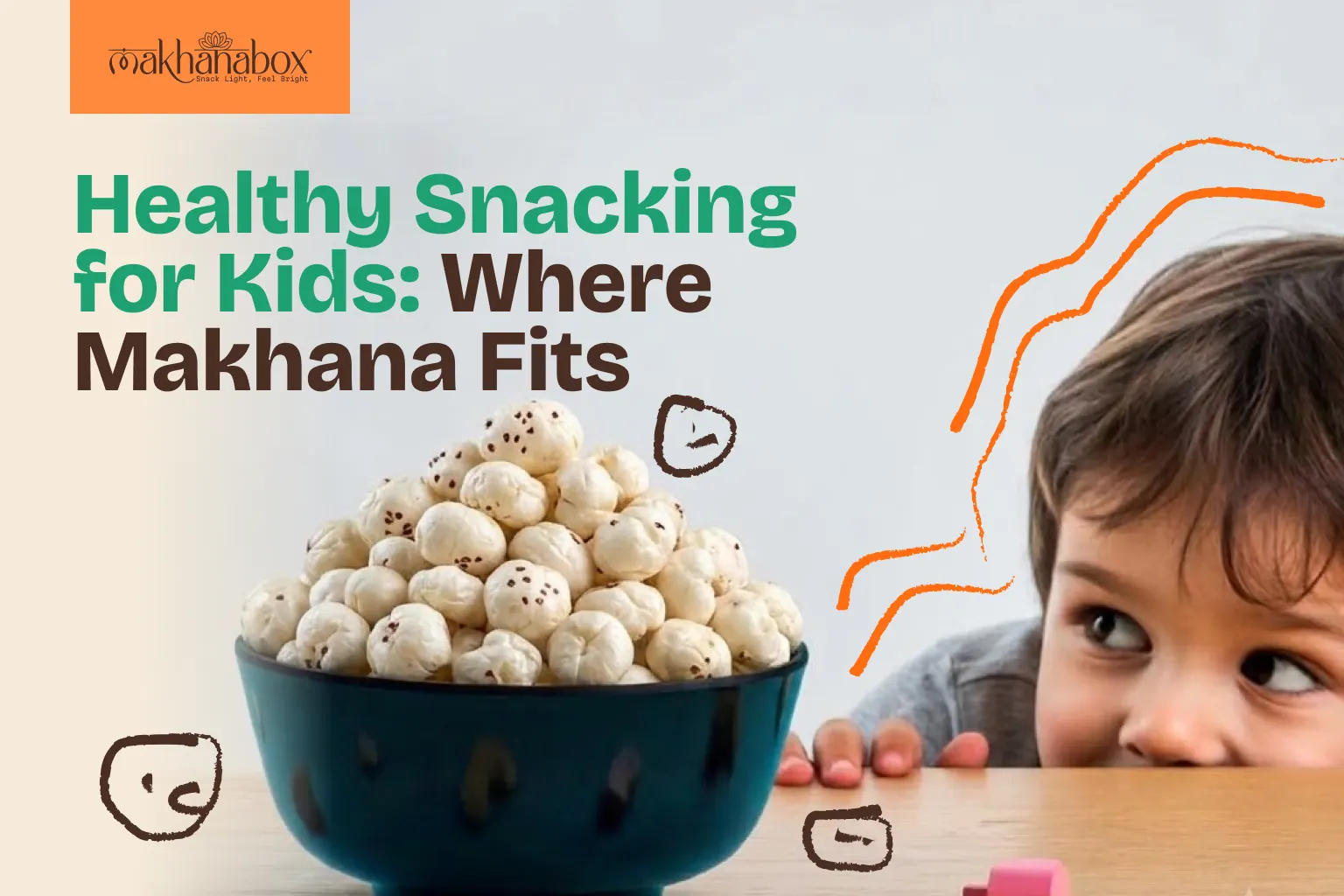
Roasted makhana can be a reasonable lunchbox alternative to packaged chips for many kids — it's light, low in fat, doesn't need refrigeration, and most children take to its mild crunch easily. It isn't automatically nut-free-safe or choking-risk-free just because it's a "healthy" snack, though, so a few practical checks are worth doing before it becomes a regular lunchbox item.
Why parents reach for it as a chip alternative
The appeal is fairly direct: makhana is dry-roasted rather than fried, so it carries a fraction of the fat of potato chips (around 0.6g per 100g for our Classic Roasted, versus a typical fried chip's much higher fat content), and it travels well in a lunchbox without going soggy or needing to be kept cold. It's also naturally gluten-free, which matters for families managing a gluten sensitivity or coeliac diagnosis in the house. None of that makes it a "superfood" — it's simply a lighter option than most packaged snack aisles offer.
Is it a nut, and does that matter for allergies?
This is the question we get asked most by parents, and it deserves a careful answer rather than a quick reassurance. Makhana is the popped seed of an aquatic plant (Euryale ferox) — botanically a seed, not a tree nut, so it isn't automatically restricted under a typical tree nut allergy. That said: allergies are individual, cross-contamination can happen during growing, drying or processing, and "not technically a tree nut" is not the same as "guaranteed safe for your child." If your child has any nut, seed, or food allergy, read the ingredient label carefully and talk to your paediatrician or allergist before introducing it — and don't rely on a snack company's blog post as the final word on your child's specific allergy risk.
Texture, chewing and choking sense
Popped makhana is light and airy, generally easier to chew than a hard nut, which is part of why it's often suggested as a snack for a wider age range than whole nuts. That said, any small, roundish food carries some choking consideration for very young children, and parents should apply the same common sense here as with any snack of that shape and size — supervise younger kids, and use your own judgement (or your paediatrician's) about the right age to introduce it.
Realistic portions, not adult-sized ones
There's no official "correct" makhana serving size for a child, and it depends on age, appetite and what else is in the lunchbox. What we'd suggest, in plain terms: a small handful is plenty for a snack-time portion — nowhere near a full 100g pouch, which is really an adult multi-snack quantity. Treat it the way you'd treat any packaged snack: as one part of a varied lunchbox, not the whole meal.
Which flavours actually work for kids
Flavour matters more with children than adults, since palates are still developing. Classic Roasted and Himalayan Pink Salt are the mildest of our six and the ones we'd suggest trying first with a child who hasn't had makhana before. Tangy Masala is a popular middle step for kids who like a bit more flavour without real spice. We'd generally steer families away from Peri-Peri for younger children specifically because of the chilli heat — it's built for adults who want a kick, not a kids' snack.
Check your school's policy too
Some schools restrict specific foods in lunchboxes because of classroom-wide allergy concerns, and policies on seeds versus nuts vary by school. It's worth a quick check with your child's school before makhana becomes a regular lunchbox staple, the same way you'd check before sending in any snack you're not certain is covered by their rules.
Frequently asked questions
Is makhana safe for kids to eat? Roasted makhana is generally considered a reasonable snack for most children, being light, low in fat, and easy to chew once popped. As with any new food, introduce it in small amounts first and check with your paediatrician if your child has allergies or a swallowing/choking concern.
Is makhana a nut allergy risk? Makhana is botanically a seed, not a tree nut, so it isn't automatically covered by a tree nut allergy. But allergies are individual and cross-contamination during processing is possible, so if your child has a nut or seed allergy, check with your doctor and read the ingredient label before offering it.
What's a good makhana portion size for a child? There's no single official number, and it varies by age and appetite, but a small handful (well under a full 100g pouch) is a sensible starting point for a lunchbox or after-school snack rather than a full adult-sized serving.
Which makhana flavour is best for kids? Milder options like Classic Roasted or Himalayan Pink Salt tend to suit children's palates better than spicier flavours like Peri-Peri. Tangy Masala is a popular middle ground for kids who like a bit of flavour without real heat.
Can makhana replace packaged chips in a school lunchbox? It can work well as a swap for many families, since it's roasted rather than fried and doesn't need refrigeration. Do check your child's school policy on snacks and any seed/nut restrictions before sending it in, since policies vary school to school.
About Makhana Box
We hear from a fair number of parents looking for a lunchbox swap, and we're always upfront that we're a snack company, not a paediatric allergist — please treat allergy and age-appropriateness questions as ones for your child's doctor. For the mildest flavours to start with, see our full flavour range or the plain, unroasted option on our raw makhana page if you'd rather roast a small batch at home yourself. Reach us anytime:
- Phone: +91 91559 97784
- Email: sales@makhanabox.com
This article is for general information and is not medical, nutritional, or allergy advice. Please consult your child's paediatrician before introducing a new food, especially if there is any known or suspected allergy.